
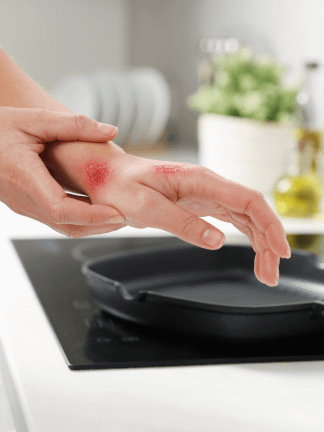
Burn wounds are not just painful; they also harm your skin, causing skin cells to die. Burn wounds can occur from heat, chemicals, electricity, sunlight, or radiation. Burns often happen from skin exposure to hot liquids and steam, fires, and flammable liquids or gases. Next, we'll talk about how to tell what degree your burn is, how to treat it, and when to get help from a doctor.
Key Takeaways
- Burn wounds are divided into 4 categories depending on their severity: first, second, third, and fourth-degree burns
- Burn wounds are an important cause of morbidity and mortality worldwide so it's important to learn basic first aid and know when to seek medical help
- Have antiseptics on hand such as Betadine® PVP-I Antiseptic Solution 10% W/V (MAL17085001XCZ) and BETADINE® Antiseptic Cream 5%W/W (MAL14035052XCZ) to prevent infection
Burn First Aid: What to Do When You or Someone Else Gets Burned
If you or a member of your family suffers a minor burn follow these steps to provide first aid:
- Remove jewellery or clothing from the affected area before it becomes swollen
- Soothe the burn:
- Run cool (not cold) water over it for 10 to 20 minutes
- Use a cool, damp cloth for facial burns
- Use ice for mouth burns
- Cleanse the wound using an antiseptic solution (e.g. Betadine® PVP-I Antiseptic Solution 10% W/V (MAL17085001XCZ)) to help prevent infection and inflammation
- Avoid bursting blisters; if one pops, carefully clean the area with water and apply an antibiotic cream
- Apply wound dressings with antiseptic cream (e.g. BETADINE® Antiseptic Cream 5%W/W (MAL14035052XCZ)) to help prevent infection and promote healing
- If needed, take a painkiller for relief
The Importance of Seeking Medical Attention for Severe Burns
It's important to prevent burns because most of them can be avoided.6 If a burn is really bad, make sure to get medical help because it could get infected. Infections are a big deal for burn patients and can cause serious problems.
If you notice any of the following signs, it is crucial to seek medical help immediately:
- Burns covering an area larger than the person's hand
- Burns penetrating deep into the skin
- Cause the skin to be dry and leathery
- May appear charred or have patches of white, brown or black
- Begin swelling very quickly
- Burns occurring on sensitive areas such as the face, neck, hands, feet, joints, or genitals
- Burns caused by chemicals, electricity, or are accompanied by smoke inhalation
- Additional wounds requiring medical attention
- Signs of shock such as cold and moist skin, sweating, rapid and shallow breathing, weakness, or dizziness
Please consult a healthcare professional if symptoms worsen or do not improve.
KKLIU: 1706/ EXP 31/12.2028

